First visit
Pre-planning is essential to achieve a successful result. We may spend between 30 minutes to one hour during this initial consultation.
During this visit, X-rays are taken, as well as an intra-oral scan. We then provide you with a referral for a CAT scan which can be taken at I-MED Radiology at Hurstville. The cost of the CAT scan is approximately $250 out-of-pocket, but it provides us with essential information (It helps us determine where the new replacement teeth will be placed, exactly where the implants will be placed in the bone to support the teeth, and the bone quantity and quality into which they will be inserted).
During this visit we may also take photos and an intra-oral scan of your teeth which provides us with a very accurate 3D representation of your teeth.
While almost all implants are placed using local anaesthesia, mild apprehension can be relieved with sedative or anti-anxiety pre-medication. During this visit, we may also prescribe appropriate antibiotics to take prior to the day of surgery and make sure you have a chlorhexidine based mouth rinse to use after the procedure.
Second visit
This visit is called the “surgical phase” and may last between one to two hours depending on the number of implants that need to be placed. With the use of digital dentistry, in most cases we are able to insert the dental implant using key-hole surgery. This means no stitches and faster healing.
After appropriately numbing the area, we proceed to insert a specifically sized titanium screw or “titanium fixture” that best fits the area we are replacing into the jaw bone. The healing process is usually accompanied by the continuation of antibiotics and appropriate pain-killers.
While the implant fixture is healing, an appropriate “healing abutment” or cover is placed to help protect it. In cases where the implant is replacing a front tooth, we endeavour to place a temporary tooth over the healing implant fixture, giving you the ability to walk out of our surgery with confidence and a feel similar to your original tooth.
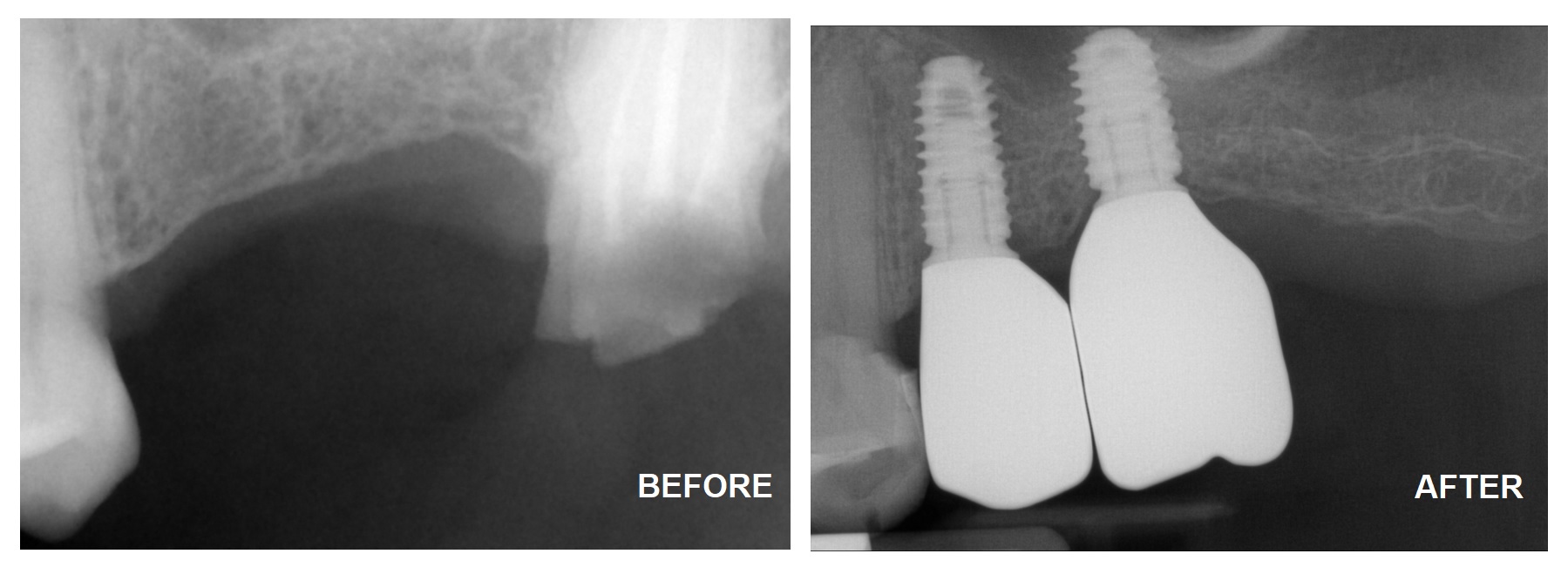
X-rays are taken either during or after the procedure to verify correct implant positioning. In certain cases, stitches may be required to close the gum flap tissues.
In most cases, you should be fit enough to drive home on your own after this visit, but we will advise you regarding this on the first visit.
Third visit
One week after the surgical phase a short 15-minute appointment may be scheduled just to see how things are progressing. If stitches were placed they will be removed.
Fourth visit
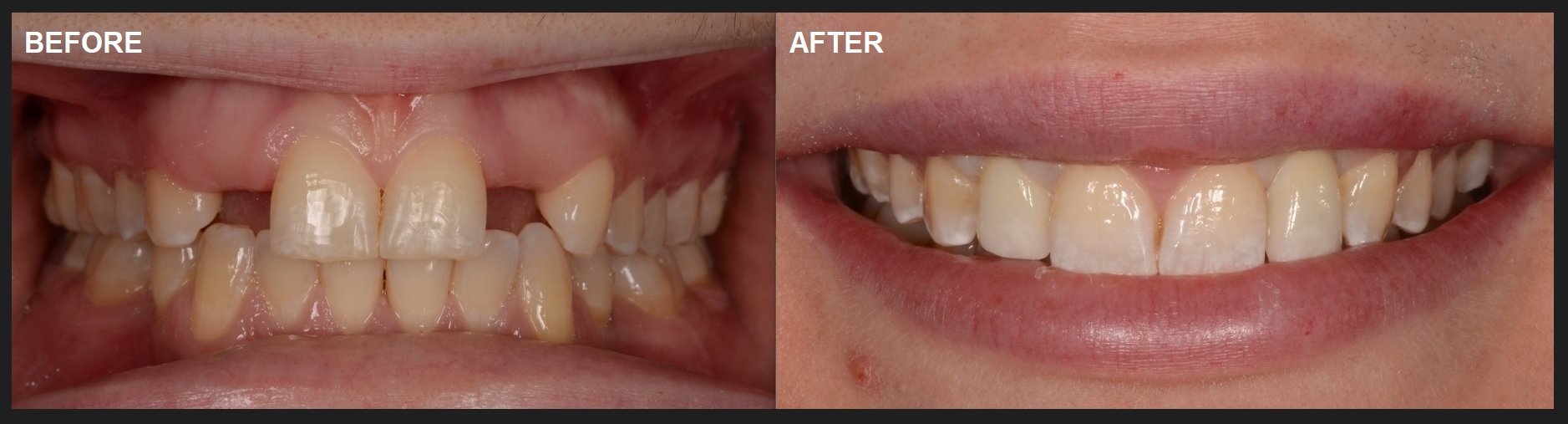
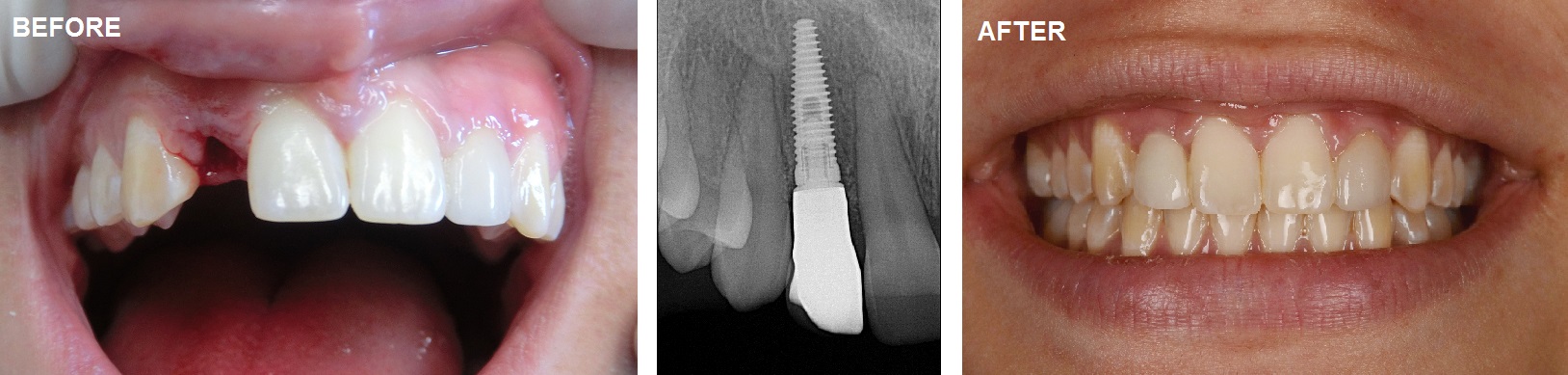
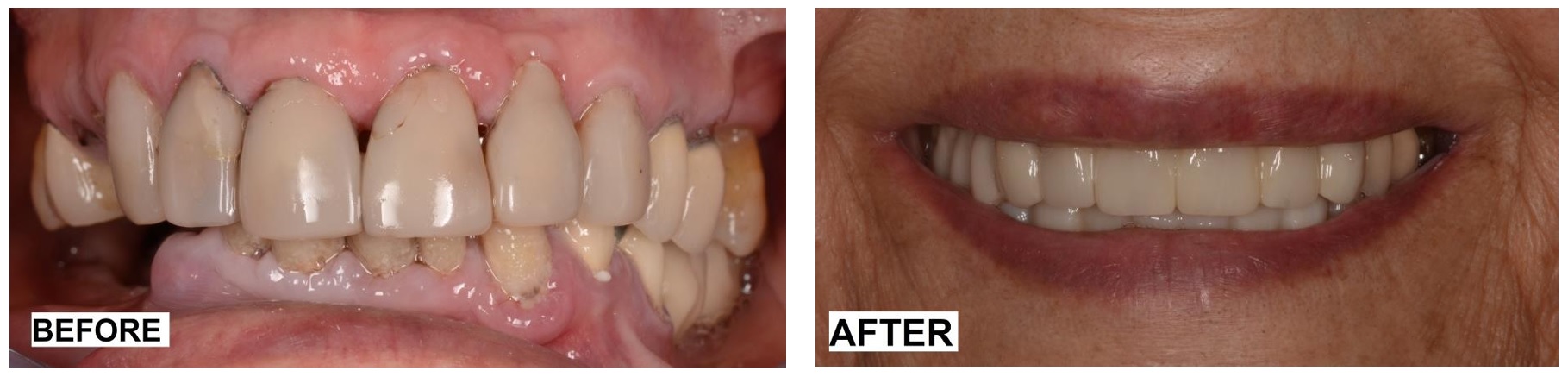
Around 3 months later, an X-ray is taken and the implant fixture is tested to confirm that it has fused to the jaw bone (in dental terms we call it osseointegration). Another intra-oral scan is taken to obtain very accurate information in order to construct a hand-crafted tooth, bridge or denture that mimics the shape, colour and contours of your natural tooth or teeth. Most people are hard-pressed to tell the difference between their own natural teeth and the implant-supported crowns or bridges we construct for them.
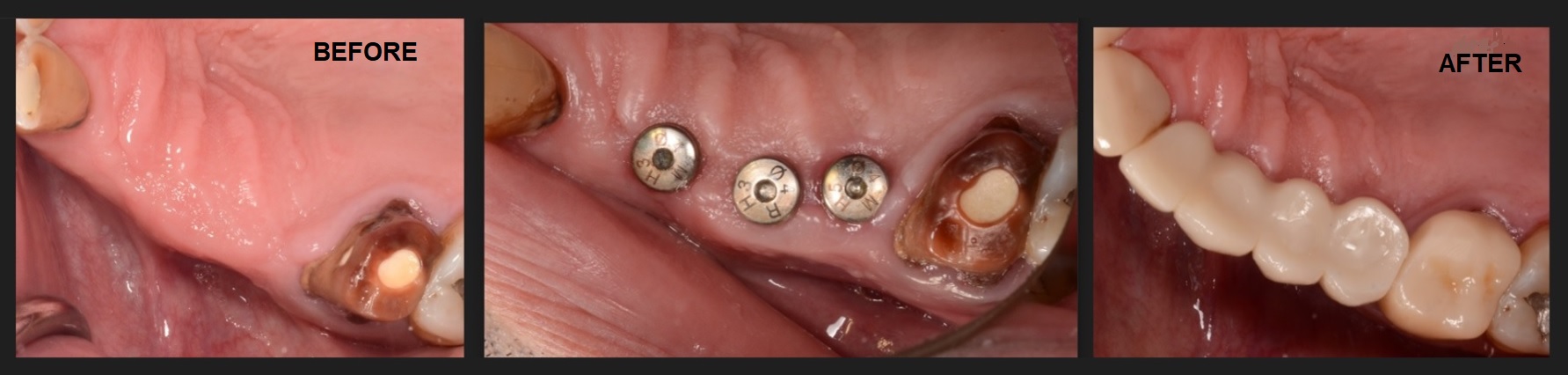
For patients who have multiple gaps in their smile, an appropriate number of implants are strategically placed. This helps stabilise and support the bridgework that fits precisely over the titanium screws that are imbedded permanently into the jaw.
They can also be used to secure uncomfortable or unstable dentures and are an ideal option for many of our patients. If dentures are constructed more visits are required before they are completed.
Depending on the number of teeth we are replacing, this visit may last between 30 mins to one hour or more. No numbing is needed for this appointment and very little if any discomfort is felt.
Fifth visit
30 minutes are needed if a single implant-supported crown is being issued. It is a relatively straight forward and exciting appointment. A longer session is needed if multiple teeth are being replaced. The crown is tested for fit, shape, contour and comfort as well as aesthetics before it is permanently placed onto the implant fixture.